
Global diesel crisis reaches peak: Is a fuel shock looming for Azerbaijan?
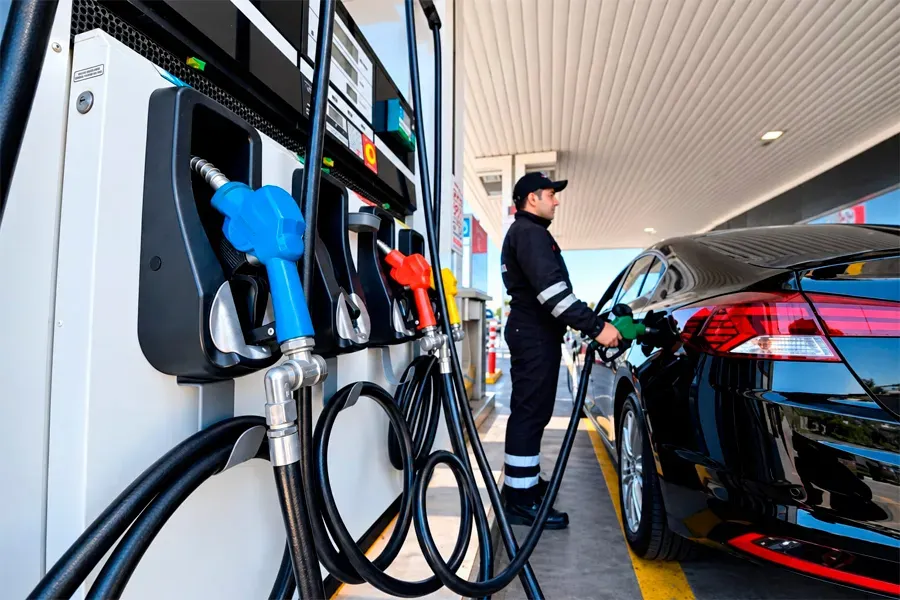
Tensions in the global diesel market have already gone beyond ordinary price volatility, raising serious concerns about the stability of fuel supplies.
TodayPress TV reports, citing Globalinfo.az, that attacks on Russian oil refineries, the conflict in the Middle East and logistical problems have sharply reduced diesel flows from major exporting regions.
According to the International Energy Agency, total diesel exports from Russia and the Middle East in August 2026 were 75 percent lower than in the same month of the previous year.
More notably, the problem is not simply the price of oil, but a shortage of finished diesel fuel itself. Since a large share of global refining capacity is operating at high utilization rates, the market’s ability to immediately meet additional demand has become limited. The IEA forecasts that global oil refining volumes will decline in 2026 and recover in 2027.
This situation is also significant for Azerbaijan. Although Azerbaijan is an oil-producing country, this does not mean that its domestic diesel market is completely isolated from global developments. The key issue is not whether oil is produced domestically, but from what sources and at what price the required volume of diesel can be supplied.
A decision adopted by the Azerbaijani government back in April is also noteworthy in this regard. A ceiling of up to 201,000 tons was set for diesel to be imported by SOCAR from May 1, 2026, to March 31, 2027. During this period, an excise tax of 1 manat per ton was set on imported diesel, while the import duty was reduced to zero. The government said these measures were aimed at ensuring a stable and uninterrupted fuel supply in the domestic market.
This figure is particularly significant against the backdrop of the global diesel crisis. If domestic production cannot comfortably meet all market demand, additional imports will be required. In that case, international diesel prices become a direct cost factor for Azerbaijan. As diesel prices rise on the global market, import costs increase, while logistics and insurance expenses may also rise.
However, it would be incorrect to automatically conclude that “diesel prices will rise in Azerbaijan.” In addition to global prices, domestic retail prices are influenced by the volume of domestic production, the share of imports, government tax and customs policies, logistics costs and tariff mechanisms.
The real risk lies elsewhere. If the diesel shortage on the global market persists, Azerbaijan’s import costs could increase and the cost of supplying the domestic market could rise. If the global crisis continues through 2027, the main issue for Azerbaijan may be not so much the price as securing the necessary volume of diesel on favorable terms.
Moreover, higher diesel prices do not only increase costs for motorists. Diesel is widely used in Azerbaijan for freight transportation, agriculture, construction and various manufacturing sectors. As a result, higher fuel costs could put pressure on transportation expenses and, in turn, on the prices of food and other goods.
Thus, the global diesel crisis could affect Azerbaijan in three stages: first, the cost of imported fuel could increase; then logistics and production costs could rise; and subsequently, this pressure could be passed on to the prices of other goods and services. At the same time, the government’s reduction of import duties and excise taxes is currently one of the mechanisms helping to limit the transmission of this pressure to the domestic market.
The key question is no longer simply “Will diesel prices rise?” The more important question is how long the global diesel crisis will last and how long Azerbaijan can meet domestic demand without incurring additional costs from external markets. The IEA’s latest assessment also indicates that, amid reduced supplies from Russia and the Middle East, tightness in the diesel market remains a significant risk in the coming months.