
Russia has put Europe on edge – The next six months…
Security concerns in Europe have once again come to the forefront. Following a phone call with NATO Secretary General Mark Rutte, Polish Prime Minister Donald Tusk said the next six months could be decisive. He also did not rule out the possibility of Russia carrying out a provocation against one of NATO’s member states.
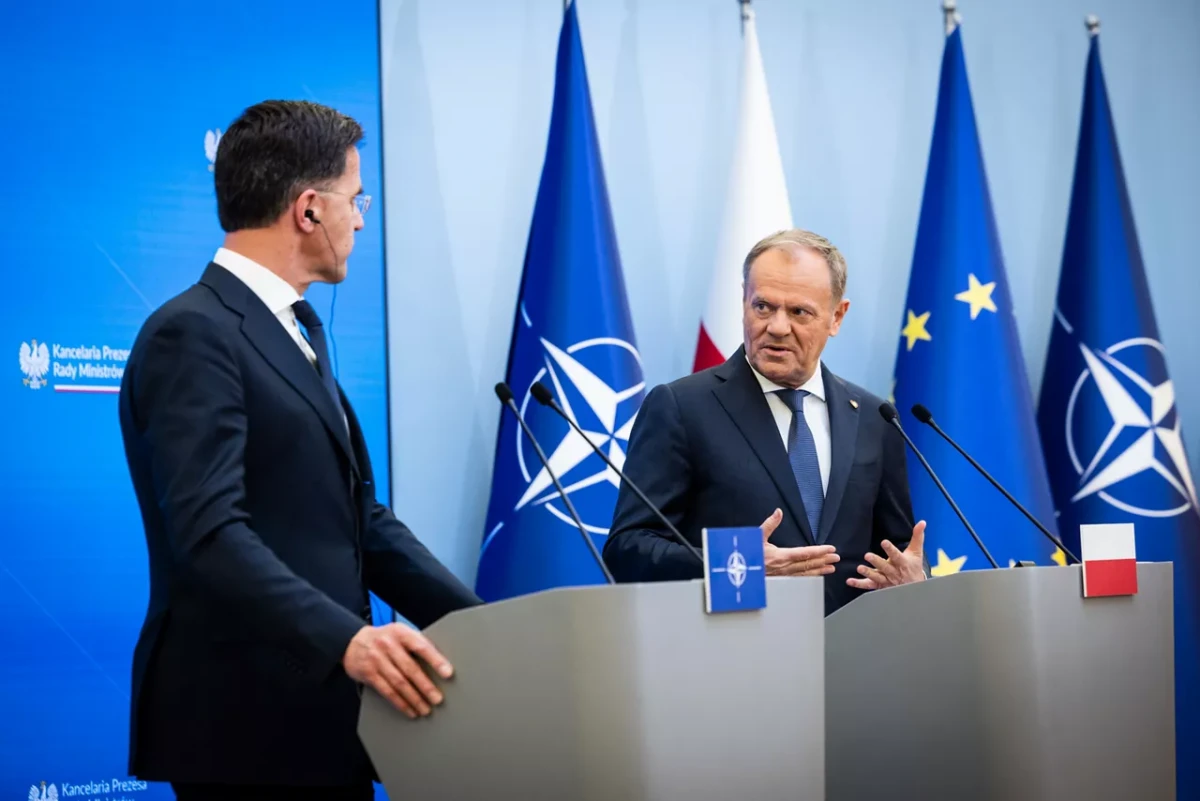
It is difficult to regard this statement as an ordinary political warning. Poland has not been discussing the threat from Russia as merely a theoretical issue in recent months. The country has already faced such risks and has become one of the key states in strengthening NATO’s eastern flank.
Tusk’s reference to “six months” is also noteworthy. He did not say that Russia would launch an attack on a specific date. However, he indicated that there were signs that the situation could become more tense in the period ahead. A few days earlier, Tusk had said that they had seen indications that Russia was preparing for escalation both in Ukraine and across the wider region.
The key issue here is not whether Russia will launch a full-scale attack on NATO. The main concern is smaller actions that could have major consequences.
For example, drones entering a country’s airspace.
In September 2025, the entry of numerous Russian drones into Polish airspace showed Europe that the boundary between the war in Ukraine and NATO territory was not as distant as many had believed. Poland called for the activation of Article 4 of the NATO treaty at the time. The Alliance subsequently launched the “Eastern Sentry” operation to strengthen air defenses along its eastern flank.
Following that incident, the issue of drones moved to an entirely different position on Europe’s security agenda.
A drone is a relatively inexpensive tool, but the political problem it creates can be extremely costly.
A drone enters the airspace of a NATO member state. It may have to be shot down. Then questions arise: Where did it come from? Who sent it? Was it a deliberate attack, or did the aircraft stray from a war zone?
If responsibility cannot be established with certainty, NATO faces an extremely difficult decision.
This could be precisely the scenario Tusk is concerned about.
If an open war breaks out between Russia and NATO, the sides will immediately define their positions. But when a provocation takes place in the “gray zone,” the situation changes completely. Damage to critical infrastructure, a cyberattack, a drone, sabotage or another incident could be used to test NATO’s response.
An incident in Germany in recent days is particularly noteworthy in this regard.
On August 4, a drone equipped with explosives was discovered near a Ukrainian aircraft at Leipzig/Halle Airport. On September 1, German authorities held Russia responsible for the incident. Moscow denied the allegation.
The significance of the incident lies in the fact that Leipzig/Halle Airport is an important facility for military and logistical support to Ukraine. In other words, the issue is no longer limited to Poland or the Baltic states’ borders.
If such an incident on German territory is confirmed to have been an operation organized by Russia, it could have a significant impact on Europe’s understanding of security.
Of course, caution is necessary here. Germany’s accusation is a political statement and Russia denies it. Therefore, it would be incorrect to present the incident as an already established fact. However, the way European states have begun assessing such incidents is itself a sufficiently serious indicator.
At the same time, NATO has not announced that Russia is preparing to directly attack one of its member states in the near future. On the contrary, recent statements from within the Alliance have emphasized that such an attack is not inevitable.
Therefore, it would be incorrect to interpret Tusk’s warning as meaning that “Russia will attack NATO in six months.”
The question is rather this: Could Russia take a limited step to test NATO’s response?
Poland’s position is not accidental.
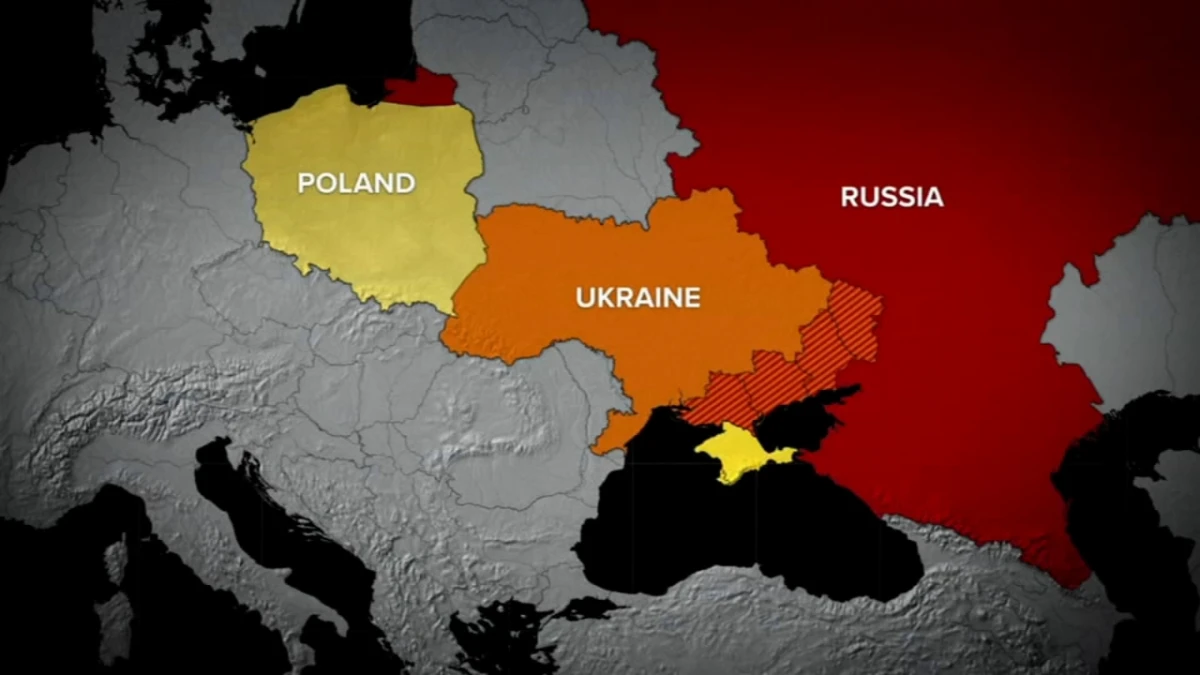
Poland is one of the main logistical hubs for Western military assistance to Ukraine. A large share of the weapons and equipment heading to Ukraine passes through Polish territory. The country’s geographical position also makes it one of the key states on NATO’s eastern flank.
Moreover, the fact that Russia and Belarus are among Poland’s neighbors makes the situation even more sensitive.
At the same time, military cooperation between Finland and Sweden is strengthening. Finland shares more than 1,300 kilometers of border with Russia. Since joining NATO, Sweden has also begun to play a greater military role in the Baltic region. Sweden’s support for Finland is therefore more than simply military cooperation between two countries.
A new defense line is taking shape in Northern Europe.
Poland to the south, and the Baltic states and Finland to the north, form NATO’s line of contact with Russia. Sweden, meanwhile, has become a country that complements the military capabilities behind this line.
Against this backdrop, there is another important issue: the US military presence in Europe.
The United States currently has around 80,000 troops in Europe. Washington is also reassessing its troop deployments on the continent. This process is causing concern among European countries. If the US reduces its military presence to some extent, European states will have to increase their own defense capabilities more rapidly.
This is also why Tusk’s statement that providing Ukraine with more air defense systems is important for Poland’s and Europe’s overall security is significant.
From Poland’s perspective, every Russian missile and drone intercepted over Ukraine is not viewed solely as an issue of Ukraine’s defense. Warsaw believes that weakening Ukraine’s air defenses also increases the risk of the effects of the war moving closer to NATO’s borders.
Seen from this perspective, Tusk’s reference to “six months” becomes clearer.
Poland is not saying that Russia will definitely attack NATO. It is simply concerned that an incident in the period ahead could develop into a larger crisis.
That possibility cannot be completely ruled out.
The experience of recent years shows that the confrontation between Russia and the West is no longer limited to a battlefield where tanks face each other. Drones, cyberattacks, sabotage, energy infrastructure and logistical routes have also become part of the confrontation.
That is why the message Europe is sending now is actually very simple:
We do not want war, but we do not intend to be caught unprepared for the next incident.
This is also the main meaning of Tusk’s warning.
No one can say with certainty what will happen at the end of the six-month period. But the simultaneous strengthening of defenses by Poland, Finland, Sweden and the Baltic states shows one thing: Europe is no longer confident that the confrontation with Russia will remain confined to Ukrainian territory.
The most dangerous scenario is not necessarily the declaration of a major war, but the emergence of hesitation over how to respond to a small incident.
Because the key question facing NATO is no longer simply: “Will Russia attack?”
Kubra Musayeva