
Baku sits at the same table with Asia’s biggest powers in Bishkek – What’s in the file?
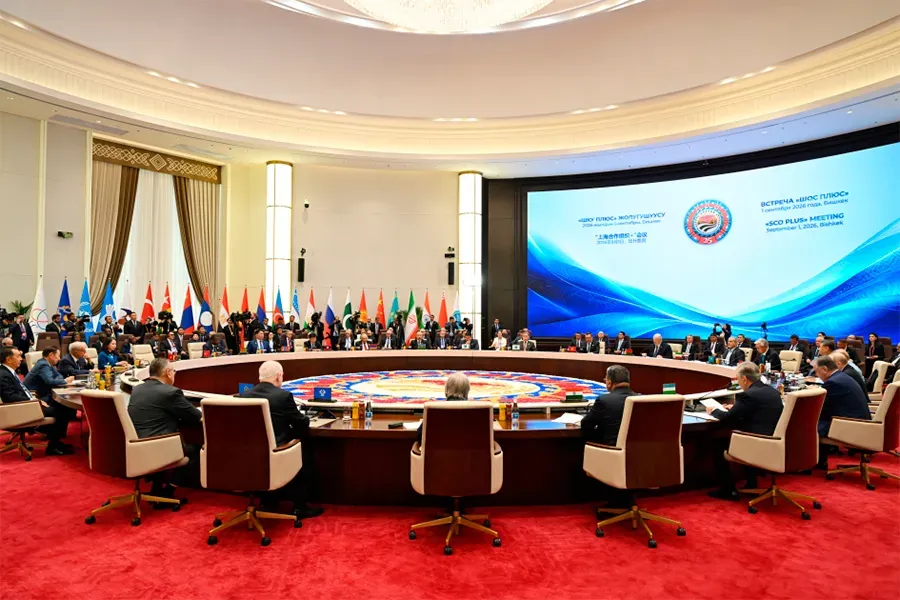
For two days now, the Shanghai Cooperation Organization (SCO) summit in Bishkek has been at the center of attention in the Azerbaijani media. Interestingly, the platform we call the SCO today brings together approximately 44 percent of the world’s population and an economic power accounting for more than a quarter of global GDP — more than $24 trillion.
But what does this summit add to the geopolitical map of the South Caucasus?
President Ilham Aliyev’s participation in the summit once again brought Azerbaijan’s weight in the Eurasian space and its future-oriented moves into focus. Because being at the center of such a huge market means significant dividends for Azerbaijan.
The most visible of these dividends, and the one that can be felt in the daily lives of each of us, is the country’s transportation and logistics potential. Today, the volume of cargo transported from China to Europe is measured in billions of dollars annually. One of the key points emphasized in Bishkek was precisely this: Azerbaijan is the safest and most flexible link of the Middle Corridor. The nearly 60 percent increase in the volume of cargo transported through this corridor in recent years alone shows that the Port of Baku and the Baku–Tbilisi–Kars railway are not merely alternative routes for SCO countries, but indispensable ones. The plan to increase the Port of Baku’s annual cargo-handling capacity from 15 million tons to 25 million tons is itself a response to this growing demand. This means transit revenues flowing into the country, new jobs being created, and rapid growth in the non-oil sector.
Another interesting aspect emerges in the energy sector. Azerbaijan, traditionally an oil and gas exporter, is now becoming a “green energy” hub for the SCO geography. The China–Azerbaijan partnership, further strengthened on the sidelines of the summit, is already being discussed in concrete figures. Azerbaijan has set a target of increasing the share of renewable energy to 30 percent by 2030, and billions of dollars in foreign investment in this sector are being realized largely through the technologies and capital of leading SCO states. At the same time, the project to transmit Central Asian electricity to Europe via Azerbaijan through an underwater cable across the Caspian Sea places our country at the very center of the regional energy network.
Behind all these economic moves, however, lies a very carefully calculated diplomatic balance. On the one hand, Baku ensures the energy security of the European Union; on the other, it sits at the same table with Asia’s biggest powers in Bishkek. This is not about choosing between the West and the East, but about the art of combining the opportunities offered by both sides in pursuit of Azerbaijan’s national interests. The prospect of opening the Zangezur Corridor is also part of this broader picture; the extension of the transport route from China through Nakhchivan to Türkiye and Europe would also open a new route for SCO members.
**The Bishkek summit further strengthened Azerbaijan’s economic, political and logistical position across a vast geography inhabited by more than 3.5 billion people. ... And once again, Baku demonstrated that it is not a passive observer, but one of the key players shaping the terms and turning opportunities into gains.**
Giymat Mahir