
Three Slogans and One Old Reflex: Baku–Moscow Relations Face a New Test
The three posters placed in front of the Guest House of the Azerbaijani Embassy in Moscow on August 27 are the latest episode in the diplomatic tensions of the past two years. There is no need to reproduce them again, because they merely repeat the political line pursued daily through official information channels. Footage of the rally was published by the “Прямое действие Z” channel, which is associated with nationalist-Bolshevik circles. The Azerbaijani Foreign Ministry called the incident an “unacceptable provocation,” described it as part of the biased campaign conducted by a number of Russian media outlets in recent times, and reminded Moscow of its obligations arising from the 1961 Vienna Convention.
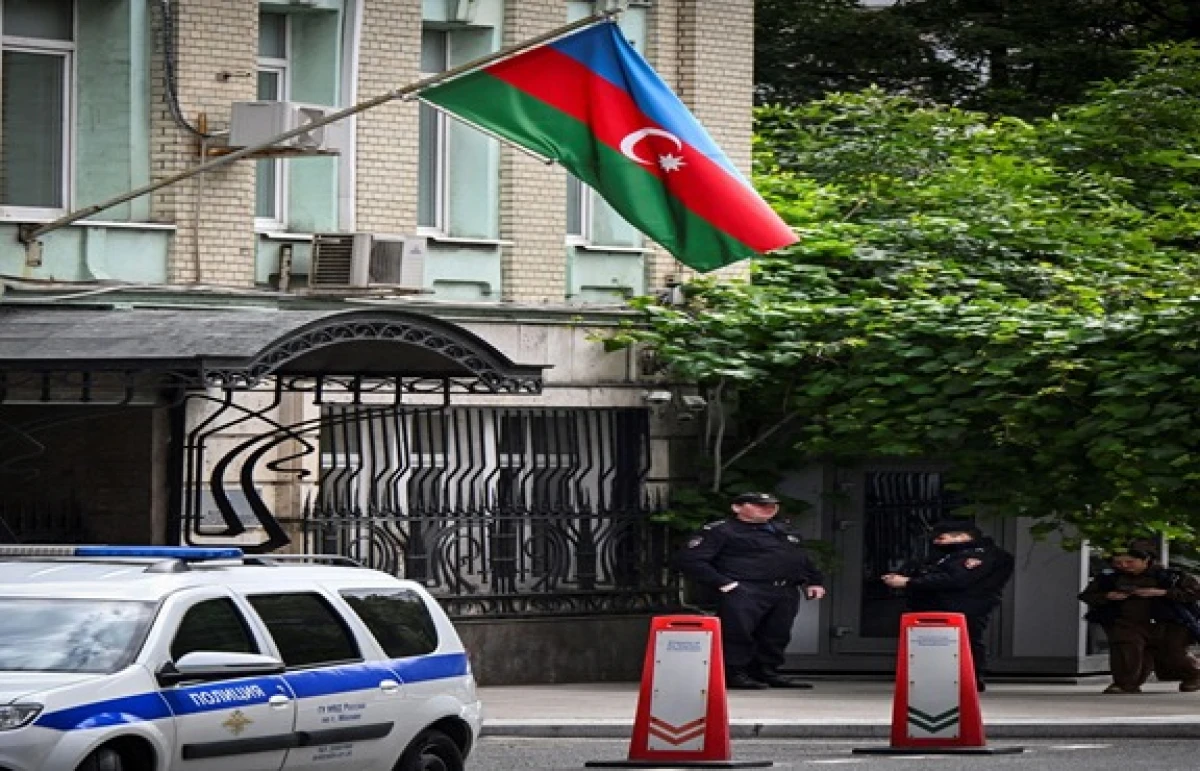
Indeed, three posters cannot be regarded as a complete picture of multifaceted relations between the two states. However, at a time when the country’s information space, the decisions of political forces ahead of elections, and the activities of the third sector are being brought under the Kremlin’s will in their entirety, it would also be naïve to describe the incident as an act of individual initiative. The issue goes beyond the identities of the people who put up the posters. Because the “Other Russia” movement, which carried out the order, combines Russian nationalism, Soviet nostalgia, and imperial ideas. What matters is the political language of the slogans and the continuation of the same accusations against Azerbaijan on various television screens, Telegram channels, expert discussions, and now in front of a building belonging to a diplomatic mission.
Just four days before the incident, Ambassador Rahman Mustafayev had announced a highly significant figure. According to the diplomat’s calculations, at least 96 Russian news portals, Telegram and YouTube channels, and various media platforms are circulating narratives portraying Azerbaijan as an “unfriendly state” before audiences numbering in the millions, and their number is steadily increasing. More importantly, Mustafayev, while emphasizing that there is political will to continue allied relations between Baku and Moscow, stated that it is precisely this harmful information environment that makes implementation of the Declaration on Allied Interaction more difficult.
When a similar political image of the same state is created across platforms of different statuses, Moscow’s response so far has essentially remained the same: the acts belong to individuals and their position does not reflect the policy of the state. Russian Foreign Ministry spokesperson Maria Zakharova, responding to Mustafayev’s statement, said that Moscow was fighting against distortions of facts about Azerbaijan while also bringing anti-Russian materials to Baku’s attention.
However, our country has for some time been openly demonstrating a political line pursued in the same direction. When Russian Ambassador Mikhail Yevdokimov was summoned to the Foreign Ministry on August 18, the Azerbaijani side did not merely express dissatisfaction with a single program. The August 13 edition of the “Чистота понимания” project, the August 7 program of Sputnik radio, claims that the Azerbaijani leadership had allegedly been placed on Russia’s list of terrorists and extremists, and threats voiced on the “Spas” channel were listed one by one. The Foreign Ministry assessed interference in Azerbaijan’s domestic political life and calls for physical violence against the people and the leadership as incidents going beyond the boundaries of media polemics. The consistency of official Baku’s reactions in recent months shows that the information environment has become a separate political agenda in bilateral relations.
One of the leading figures in the confrontation narrative is Vladimir Solovyov, a mouthpiece of Z ideology. In the language of figures shaping the political propaganda atmosphere of Russian state television, the historical sovereignty achieved by Azerbaijan, the legitimate Victory in Karabakh, Baku–Ankara relations, and the country’s contacts with the West are continuously presented through the prism of Moscow’s regional losses. Describing the decisions of an independent state arising from its national interests as distancing itself from the former imperial center, betrayal, or joining an enemy political camp reflects the Kremlin’s outlook.
The real differences of opinion became more apparent after the Victory in Karabakh. When Azerbaijan liberated its territories in 2020, it was not at war with Russia. On the contrary, for the first time in centuries of history, the fact that Russian soldiers were not sacrificed for Yerevan created a fragile atmosphere of trust in Azerbaijani public opinion, while the national hatred formed around the events of January 20 and Khojaly gave way to a weak sense of neutrality.
Meanwhile, Baku was not turning the South Caucasus into an international military testing ground against Moscow, Tehran, Washington, or other capitals; it was not bringing troops of third states into the region and was not pursuing an expansionist policy aimed at extending the geography of the Victory. When Russia launched its full-scale war against Ukraine in 2022, Azerbaijan theoretically had broader opportunities for geopolitical maneuvering. Moscow had directed a large part of its military and political resources toward Kyiv, while the West was seeking new partners across the post-Soviet space. However, Baku did not use the new circumstances to create confrontation on Russia’s southern borders, did not agree to the opening of a third front on its territory, did not join the West’s sanctions coalition, and continued its economic and political ties with the north.
At the same time, our state rightly did not change its position on Ukraine’s territorial integrity. Even before the war, in January 2022, a joint document signed by Ilham Aliyev and Volodymyr Zelensky affirmed the internationally recognized borders, sovereignty, and territorial integrity of both countries. In other words, not becoming a platform directed against Russia could not be interpreted as agreeing with the policy of its northern neighbor.
A number of circles that regard Azerbaijan’s independent state and national identity, and ultimately its rightful victory after two centuries of division and losses, as their own defeat are forces that have lost to our army, regardless of which capital or ideology they represent. Centers that are now repeating the line once initiated by Mikhail Gorbachev and supported by U.S. leaders, congressmen, and European partners are, to an equal degree, neo-imperialist and representatives of a party of war for our country.
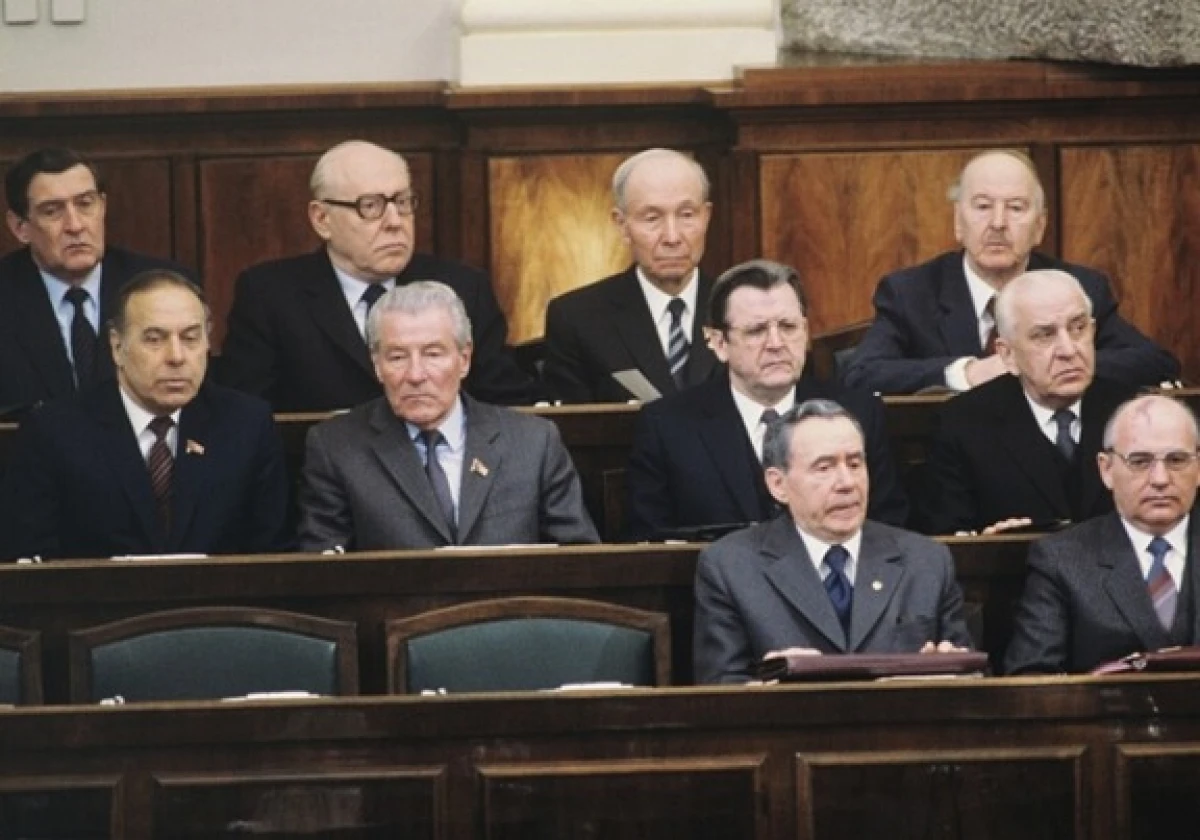
The Declaration on Allied Interaction between Azerbaijan and Russia, signed on February 22, 2022, itself enshrines the principle that the two countries pursue independent foreign policies and do not interfere in each other’s freedom, sovereignty, territorial integrity, or internal affairs. Therefore, Azerbaijan is not demanding any special privilege from Russia that is not provided for in the legal framework of bilateral relations. Baku wants sovereign equality.
This is precisely where the change that political and information circles in Moscow representing traditional imperial ideology find difficult to accept emerges. After 2020, Azerbaijan changed the monopolistic geopolitical reality that had taken shape in the region since the 1990s and had been shared through the OSCE Minsk Group. The new political and military weight gained by our country makes it possible to build a different security architecture. A state that fought against occupation for thirty years now ensures its own security, conducts the peace agenda with Armenia directly, withdraws the Russian peacekeeping contingent from its territory ahead of schedule, establishes new regional ties with Türkiye and Central Asia, plays a role in Europe’s energy security, and connects East and West, as well as North and South, amid global embargoes.
The fact that Azerbaijan achieved the Victory in Karabakh through its own strength and that this victory is accepted as a rightful one is the main obstacle in relations with Great Russians who cannot break away from the molds of the Tsarist era. Explaining the victory of an independent state through the decision of a former political center is the modern form of an imperial reflex.
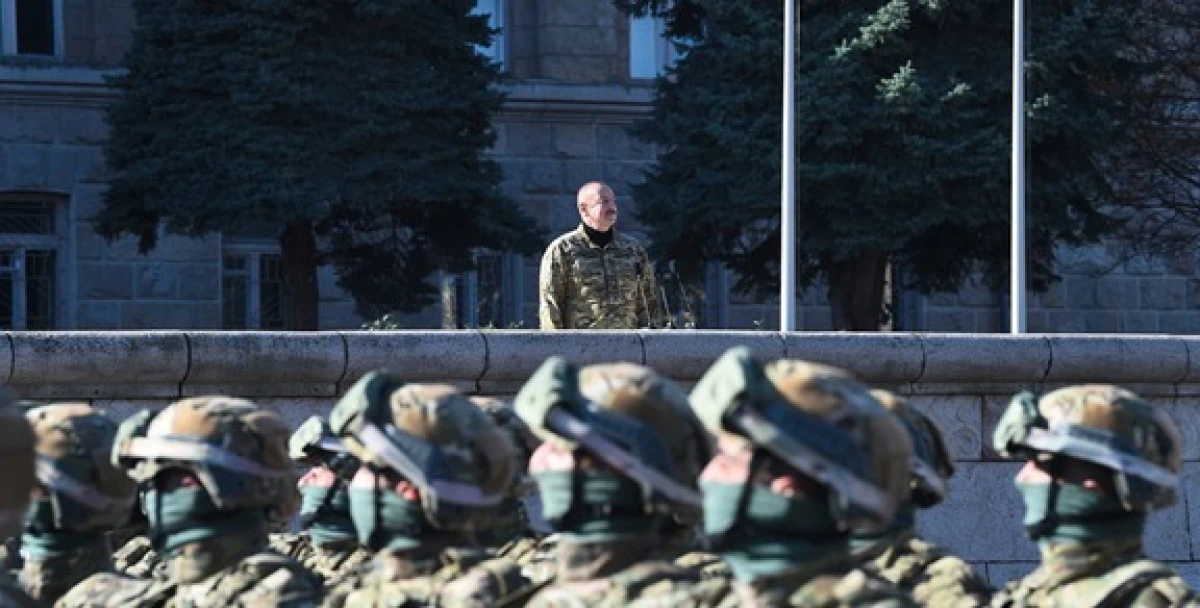
Azerbaijan’s Victory was not a gift from anyone. Russia put forward its role as a mediator in the cessation of military operations on November 10, 2020, and Baku did not deny this. However, claiming authorship of the political and military Victory on the basis of a temporary mission is unacceptable. Had there been no geographical heights captured by the Azerbaijani Army on the battlefield, had Shusha and the liberated territories not provided the foundation, the November document would not have emerged in the form of a capitulation act either. The Supreme Commander-in-Chief’s military and political leadership lay in achieving victory under the right regional and international conditions, in choosing the right moment, in the unbreakable unity between the army, the people, and the state, in a modern model of warfare with a newly emerging analogy, and, ultimately, in the just and fair nature of the struggle.
For many years, Russia has regarded the expansion of Western positions in the South Caucasus as an undesirable movement and plan for its own security. Yet the forces striking at Moscow’s influence in the region are also those sitting in the Kremlin and still making decisions through imperial reflexes. It is unresolved conflicts, decades-long occupation, and a policy built around regional confrontation that brought the West into the region.
The attempt to freeze the Karabakh conflict for many years resulted in the United States and France becoming major powers in the region under the mandate of the OSCE Minsk Group. Azerbaijan, which chose a long-term path against occupation, expanded its security capabilities, strengthened military ties with Türkiye and other partners, and gained access to Israel’s modern weapons technologies. Armenia, despite being Russia’s military ally, later accepted the European Union’s observation mission, sought a security alliance with the West, and is now saying goodbye to the CSTO.
As a result, the long-term conflict model that Moscow had turned into a weapon to preserve its sphere of influence failed. The Second Karabakh War in fact also brought down the course of centuries-old domination.
If Russia had chosen another strategic course, prioritizing an end to aggression and regional economic integration rather than preserving the status quo that delayed the restoration of Azerbaijan’s territorial integrity for decades, the current geopolitical landscape of the South Caucasus would also be different. The military and political support given to Armenia’s occupation policy for a long time destroyed Moscow’s position in the region.
It is precisely the latest example that demonstrates why it is wrong to explain the fundamental differences in Azerbaijan–Russia relations merely through Baku’s “pro-Western orientation.” Armenia, which for decades was regarded as Russia’s main military ally in the South Caucasus, was a CSTO member, and hosted a military base on its territory, has now moved away from being a Russian outpost. The reason why two peoples who were constantly drawn into war are demonstrating their ability to make sovereign decisions cannot be sought solely in Yerevan’s choices. The results of the Patriotic War changed the reality of the past two centuries. Yet the policy of turning a country into a frontline on the southern flank has now culminated in the United States and the European Union seeking to push Moscow out of the region.
The geopolitical struggle for the region no longer depends on what foreign policy course Armenia chooses. In the ruthless competition around Yerevan, Baku, for the first time in its history, has the decisive voice and determines the future political fate of the South Caucasus as a whole.
The rhetoric heard from time to time in various nationalist and Eurasianist political circles in Russia, to the effect of “dealing with the Caucasus after Ukraine,” is an expression of an aggressive political mindset. Forces that present the phrase well known from history as an official formula of the entire Russian state policy have become increasingly active in recent times and have turned into the main voices. The hardening of these calls demonstrates the clash between the sovereignty of states in the post-Soviet space and Russia’s perceptions of its historical sphere of influence. The dangerous aspect of the information campaign against Azerbaijan is that old repressive and colonial political vocabulary is gradually turning into the language of interstate relations.
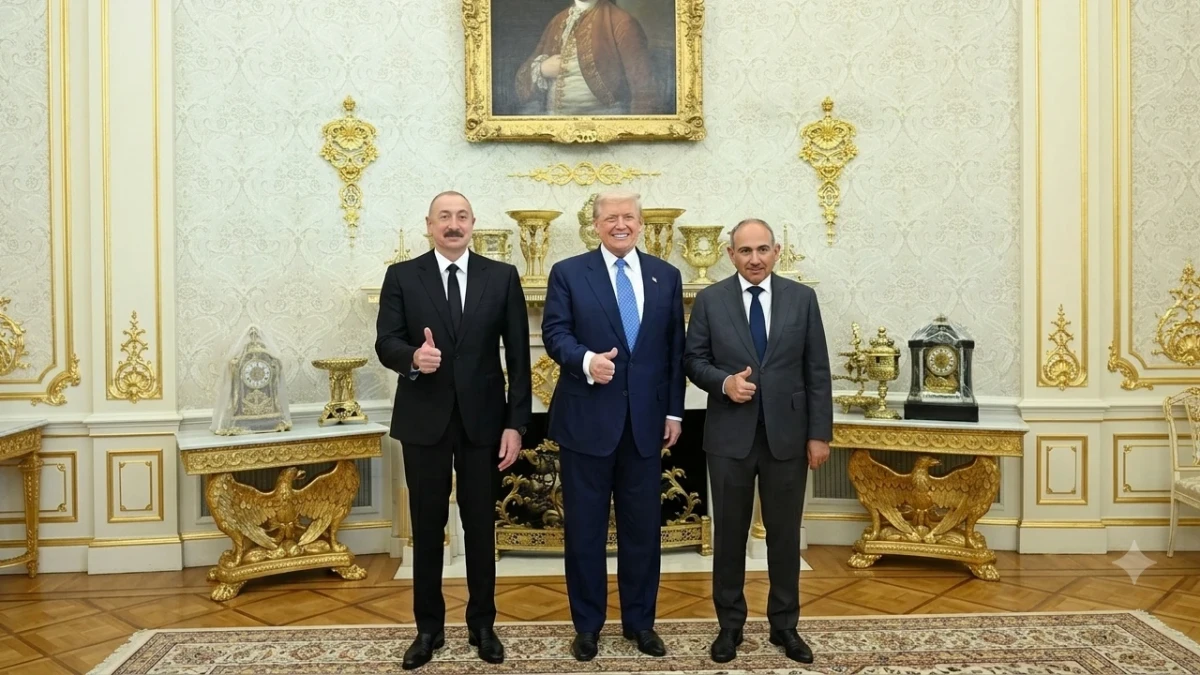
The Joint Declaration signed at the White House on August 8, 2025, should be a separate political signal for Moscow. The two principal states of the South Caucasus, which for more than thirty years Russia regarded as its immediate neighborhood and in whose security system it claimed an exceptional role, formalized an important stage of the peace process in Washington, while the legitimacy of the results of the Patriotic War was recognized in one of the world’s most powerful political capitals. Moscow’s encouragement of hostility for many years instead of fair and effective mediation created a deep political vacuum. In geopolitics, a vacuum does not remain unoccupied for long; where one power cannot create trust and results, other hegemons move in. The most important lesson of the August 8 agreement for Moscow is not peace itself, but proof that peace is possible without Russia. If Washington succeeds, the message that “post-Soviet conflicts can also be resolved without Russia” will become stronger. Such a prospect is a strategic threat to the Great Russians.
For Azerbaijan, the historical memory of traditional occupation, division, and losses encompasses a period of more than two centuries. The 1805 Treaty of Kurekchay, the 1813 Treaty of Gulistan, and the 1828 Treaty of Turkmenchay were decisive stages in changing the political map of the South Caucasus. The peoples living within the new borders and political formations eventually gained independence. Yet the Victory in Karabakh is the true act of liberation that brought an end to two centuries of imperial rule. For a long time, the fate of the South Caucasus was determined more by great powers than by the will of the peoples of the region.
Now, however, an essentially different historical process is underway. The legal framework for future relations between Baku and Yerevan is being shaped not by documents written by imperial centers outside the region, but by the sovereign will of Azerbaijan and Armenia themselves.
If, under Ilham Aliyev’s leadership, the unique and unprecedented event of the past century — a peace agenda pursued after a just war — is formalized through an “Aliyev treaty,” then it is not only a centuries-old war that comes to an end. Such an agreement would demonstrate that the center of decision-making in the South Caucasus has shifted to the political will of the states of the region themselves.
In fact, a stable and secure Caucasus serves the objective interests of most peace-loving capitals — states that do not pursue a policy of occupation.
If Russia is choosing between staying in or leaving the region, and if it is already trying to change a resolved and, for the first time in history, just order, then it is pursuing a policy of Ukrainizing the Caucasus and itself becomes the cause of international embargoes and of states seeking security within NATO.
The advancement of the peace process between Baku and Yerevan is causing the previous model of regional monopolism and exploitation to collapse. For centuries, there was a security formula concerning the South Caucasus — in reality, a formula of fear: if Russia were absent and Western centers did not extend a hand, Azerbaijanis and Armenians would go to war again, and Moscow’s or Brussels’ military-political involvement was the only mechanism preventing confrontation. Now, however, Baku and Yerevan are talking directly, resolving complex border issues, determining the foundations of a peace document, and creating political alternatives outside the previous security architecture in order to emerge from a centuries-old conflict. Baku and Yerevan are reconnecting the historical line.
If Azerbaijan and Armenia are capable of making peace themselves, the thesis that “if Russia withdraws from the region, the sides will clash with each other again” loses its significance completely. On the contrary, recent developments raise another question: was peace actually being built in the South Caucasus for all those years, or were controlled conflicts one of the means of preserving regional influence?
The dilemma, which is always relevant, also intersects in a certain sense with Russia’s past policies. Victory over fascism in World War II is a common historical achievement of all the peoples of the Soviet Union. Azerbaijan made an invaluable contribution to the Victory 80 years ago with hundreds of thousands of soldiers, Baku oil, and enormous industrial potential. Therefore, preserving historical heritage is also a policy characteristic of our country.
The outcome of 1945 holds a special place in the security and statehood ideology of modern Russia. Turning the Soviet Union’s common Victory into a pretext for dictating and claiming hegemony over the foreign-policy choices of states that gained independence after 1991 produces serious consequences. If the West is experiencing the euphoria of a triumphant victory over the Soviets, Moscow is also turning the Victory of 1945 into an event restricting the sovereignty of neighboring states.
The overall picture can now be seen — the essence of the latest tension between Baku and Moscow is also revealed along the boundaries of sovereignty.
On December 25, 2024, the downing of an Embraer 190 aircraft belonging to AZAL became a serious test for relations between the two countries. Azerbaijan demonstrated that Baku demands correct and equal relations from Moscow — an apology must be issued, compensation must be paid, and those responsible must be punished. Neither Strasbourg nor the Kremlin bureaucracy can determine conditions for Baku, the governance of the state and appointment of personnel, or foreign-policy directives. Those seeking to justify the downing of the aircraft are the same forces that played an authorial role in the tragedies of the 1990s.
The events in Yekaterinburg in June 2025, the term “ethnic criminal group” used by law-enforcement agencies, and the discriminatory campaign around the ethnicity of the persons who committed crimes — linking concepts such as “ethnic organized criminal group,” “diaspora,” and “Azerbaijani business” in the media — constitute humanitarian pressure against our country and a deliberate hybrid information war.
Just as Azerbaijan has taken firm measures against Western political institutions, for example against influence agents operating under the umbrella of USAID, its demonstration that Russian information and cultural influence tools — including the Cultural Center — do not enjoy untouchable status, and its adoption of symmetrical decisions, show that sovereignty is not limited to our Victory, national borders, and foreign policy, but is also reflected in independent legal decisions.
Therefore, the Azerbaijani Foreign Ministry’s reaction to the rally in front of the Guest House in Moscow, and its refusal to rule out that the provocation serves to artificially escalate relations and forms part of the biased campaign conducted by a number of media resources, is entirely logical.
Moscow’s old political vocabulary is not expressed only through the language of television propagandists. In February 2026, Vladimir Medinsky, Putin’s aide, said that empires could be “bad” or “good,” placing Russia in the second category, and called for abandoning the negative attitude toward the concept of “imperialism” inherited from the Soviet period. Historian Medinsky, who replaced Surkov, the architect of the concept of sovereign democracy, had previously presented Russia in his series of books entitled “Собиратели земли Русской” — within the official concept, not as a country that conquered the territories of other peoples, but as a state that “collected” or “gathered” lands. As a result, the expansion of the empire ceases to be occupation; when “собирание земель” takes place, expansion acquires legal and moral legitimacy.
Likewise, when Sergey Lavrov spoke about Armenia on August 28 and said, regarding organizing coups, “we have not learned to do that,” the language in which neighboring countries will be addressed has already been announced.
Meanwhile, the idea of “gathering Russian lands” in Ukraine has had extremely grave consequences. The search for the “mother state” has continued for five years, but its path runs through destroyed cities, the lives of millions of people, and enormous human losses among Russians as well. The greatness of a state is not determined by how many kilometers its border line is pushed forward; it is measured by the price at which it protects its citizens’ lives and brings them prosperity.
That is why the political language used by the three posters is the same. The phrase “Russian blood is on your hands” transfers interstate relations into an ethnic dimension. The slogan “Keep your hands off Russian citizens” turns the passports of persons legally responsible on Azerbaijani territory into an argument for legal immunity. The third slogan, targeting Azerbaijan’s security agencies and the head of state, brings the broader accusatory rhetoric formed in the information space in recent times into a street rally. RTVI’s report on the incident also confirms that these three slogans constituted the main political content of the rally.
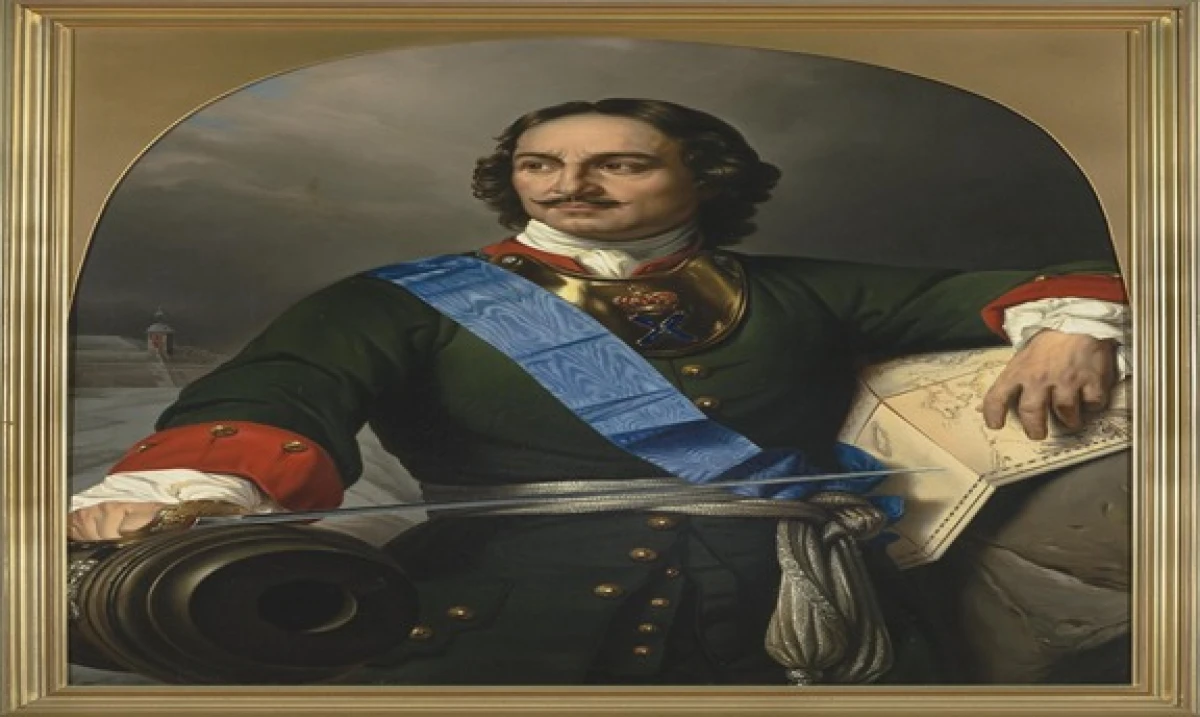
Finally, everyone must understand — there is no anti-Russian Azerbaijan before Moscow; there is an independent Azerbaijan that does not depend on Russia and is moving forward. Those forces that regard the Victory achieved under President Ilham Aliyev’s leadership as contrary to the wills of Peter the Great and historical imperial directives are forced to accept the results of the policy initiated by National Leader Heydar Aliyev.
Understanding the difference between these two concepts is one of the main conditions, even the cornerstone, of future relations.
Azerbaijan is not the remote peripheral country left under the defeat and occupation of the 1990s. The threat once made by Pavel Grachev to send Russian tanks into Baku in opposition to the oil contracts now belongs to the old files of history.
In the new reality of the South Caucasus, Moscow’s main loss does not end with the elimination of specific military bases, mediation missions, or political influence mechanisms. More importantly, the perception that the states of the region cannot make decisions without Russia has collapsed.
Azerbaijan changed a two-century-old reality in Karabakh. Armenia has begun demonstrating the same reality through its security policy. Ilham Aliyev foresightedly stated back in 2016 that Azerbaijan’s territorial integrity and just victory would play an important role in Armenia’s own independence. This strategic vision was confirmed after the 44-day war. Now even Armenians are beginning to deeply understand the “Karabakh trap” articulated by Nikol Pashinyan and the fact that Yerevan was made captive to the myth of “Greater Armenia.” Saying that “we are abandoning a Constitution written on the logic of conflict and confrontation,” the Armenian Prime Minister is attempting to change the cornerstone of the new state — its Basic Law — into the status of a people without territorial claims and without being a weapon in the hands of empires. The reason for avoiding calling Russia a “strategic ally” and removing the name of its historical patron from the Government Program being prepared until 2030 is the same.
A stable and secure Caucasus should serve the interests of states in the West and East, including the North and South. It is a policy that keeps foreign military alliances away from the region while Azerbaijan and Armenia do not wage war against each other, open their borders, regional communications operate, and states recognize each other’s territorial integrity. A conflict-free Caucasus benefits all peoples of the region. The security platform put forward by Ilham Aliyev is the only solution not only for Georgians, Azerbaijanis, and Armenians, but also for Chechens, mountain peoples, and the global war being waged with Iran. The Azerbaijani leader’s statesmanship and peace policy could also bring Moscow and Kyiv out of their destructive war.
Russia must recognize the full political subjectivity of the independent states in its immediate neighborhood. An alliance is the coordination of the interests of states possessing equal sovereignty. Otherwise, if a partner’s independent decisions are accepted only as long as they coincide with Moscow’s interests, if state-level raiding is carried out against diaspora leaders, then the 96 information channels speaking the language of terror are already a smaller problem.
The answer to the August 27 rally should be sought in the global tectonic change following the Victory, in rereading Peter the Great’s wills, in the defeat of Gorbachev–Yeltsin policy, and in President Ilham Aliyev’s independent leadership, which is not dependent on any capital.
The slogans on the three posters that could be placed in front of Russia’s Guest House in Azerbaijan would be as follows: the old hierarchy and subordination have failed; the policy of blackening sovereign Azerbaijan on Moscow’s monitors and streets is futile; the imperial reflex fits much more closely into the ideological framework of the new fires that third forces are trying to ignite in the Caucasus.
It is never too late to change!
Zahid Oruj
For TodayPress TV
PHOTOS