
Azerbaijan is changing its destiny: A new imperial corridor with Central Asia…
An event took place in Turkmenistan today whose significance extends far beyond that of another international meeting. The Eighth Consultative Meeting of the Heads of State of Central Asia was held for the first time with Azerbaijan participating as a full-fledged member. Moreover, Azerbaijan was elected to chair the format for the next period, and the next meeting, scheduled for 2027, will be held on its territory.
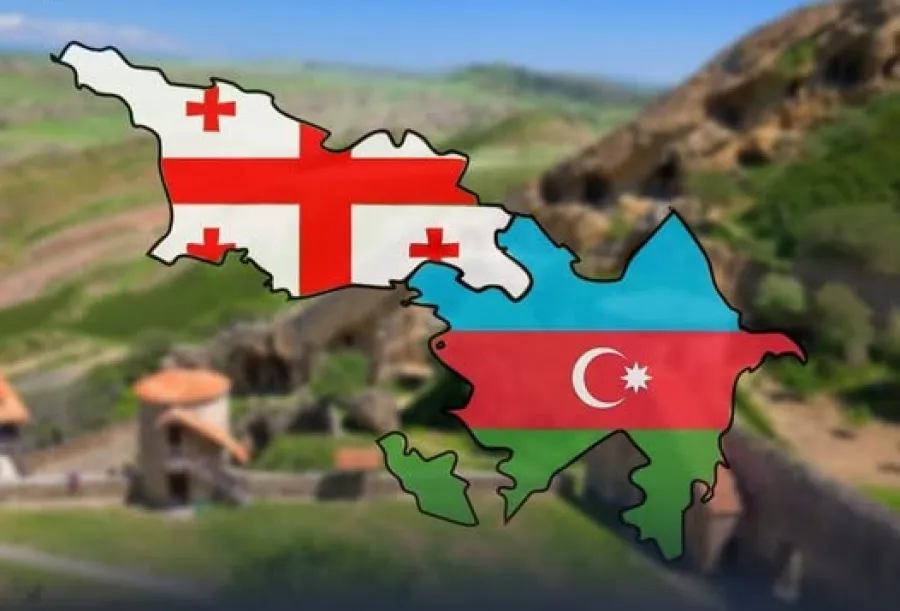
At first glance, this may appear to be an ordinary expansion of a regional format. However, when viewed in a broader geopolitical context, it becomes clear that what is taking shape is a new space for cooperation encompassing Central Asia, the Caspian Sea and the South Caucasus.
This is precisely where the principal significance of today’s summit lies.
As early as November 2025, Azerbaijan unanimously obtained the status of a full-fledged participant in the Consultative Meeting of the Heads of State of Central Asia. Today, that decision has been followed by practical implementation, at a time when the format itself is beginning to acquire significance far beyond its original regional agenda.
The President of Azerbaijan cited a telling figure: last year, Azerbaijan’s trade turnover with the countries of Central Asia increased by more than 50 percent. More than 400 companies with capital originating from Central Asian countries are now operating in Azerbaijan, and joint investment funds have been established with Kazakhstan, Uzbekistan and Kyrgyzstan. What is at stake is no longer merely an increase in mutual trade, but also joint investment, production and access to external markets. This is a fundamental distinction.
What is emerging today is not simply a system of trade between states; rather, an interconnected economic space is gradually taking shape.
However, its significance is not determined by economics alone.
The world is experiencing a period of serious geopolitical instability. The Russian-Ukrainian war, tensions in the Middle East, and risks surrounding the Strait of Hormuz and the Bab el-Mandeb Strait are compelling states and businesses to seek more reliable transport and energy routes.
Under these circumstances, geography is once again becoming one of the most important factors in world politics, while a secure route is becoming a strategic asset.
This is precisely why the Middle Corridor, which connects China and Central Asia with the Caspian Sea, Azerbaijan, the South Caucasus, Türkiye and, ultimately, European markets, is becoming increasingly important.
For the countries of Central Asia, it offers an opportunity to diversify their external trade ties and gain additional access to global markets. For China, it provides an alternative route to Europe; for Europe, it offers an opportunity to expand and diversify its trade and energy ties. For Azerbaijan, however, the significance of this process is even broader.
Its geographical position makes the country a natural link between Central Asia, the Caspian Sea, the Caucasus, Türkiye and Europe. Geography alone, however, is not enough. Infrastructure, political stability, economic capacity and the ability to maintain relations with different centres of power simultaneously are all essential.
It is precisely the combination of these factors that enhances Azerbaijan’s significance.
In this context, Azerbaijan’s assumption of the chairmanship of the format today carries particular meaning. During the coming period, Azerbaijan will have the opportunity not merely to host the next meeting, but also to participate in shaping the agenda of a rapidly developing framework for cooperation.
Moreover, this agenda has already expanded far beyond trade.
Today’s meeting addressed transport, energy, investment, industrial cooperation, digitalisation, artificial intelligence, environmental issues and security. The development of energy links between Central Asia and Europe through Azerbaijan is of particular importance.
Especially noteworthy is the initiative put forward by the President of Uzbekistan to move towards the formula of “6 economies — 1 product”, that is, to establish joint production chains and gradually transform economic ties into deeper industrial cooperation.
Thus, the objective is no longer simply to transport goods manufactured elsewhere, but to produce them jointly. This represents a qualitatively different level of integration.
At the same time, the new format should not be viewed as an alternative to, or a competitor with, other regional associations. On the contrary, a system of overlapping formats is taking shape today.
Central Asia and Azerbaijan are cooperating within the framework of a new consultative mechanism. In parallel, the Organization of Turkic States is developing. New transport and energy links are being established across the Caspian Sea. Türkiye is becoming a key connecting link with Europe, while China is emerging as one of the principal sources of economic and infrastructure cooperation.
As a result, a new geographical configuration is emerging in which Azerbaijan occupies a distinctive position, and this is already evident beyond the region itself. In recent years, political and business contacts between the countries of Central Asia and Azerbaijan have intensified, attracting increased engagement from China, the European Union, the United Kingdom, Germany, France and other major players. The reason is clear.
When major future transport, energy and trade routes pass through a particular geographical space, that space inevitably acquires additional political weight.
History has repeatedly demonstrated the significance of this geography. For centuries, the world’s major powers competed for control over trade routes connecting East and West. Today, technologies, infrastructure and the scale of trade have changed, but the underlying strategic logic has remained largely the same.
Routes change, and the geopolitical weight of those situated at their crossroads changes with them.
At the same time, Azerbaijan and the countries of Central Asia face not only an opportunity, but also a serious responsibility.
The greater the region’s international significance, the greater the number of external interests at stake. The larger the volume of investment and transport flows, the more intense the competition for influence becomes. The task, therefore, is not to become part of someone else’s geopolitical project, but to use their own strategic position to strengthen national interests and regional stability.
This is precisely where the concept of a middle power, which Azerbaijan has successfully demonstrated, becomes particularly important.
A middle power is a state that does not seek to compete with global centres of power on their scale, but possesses sufficient resources, political weight and diplomatic capabilities to influence developments in its own region independently and to serve as an indispensable partner for larger players.
In this respect, today’s meeting in Turkmenistan is of particular significance for Azerbaijan, because the country has not simply joined an existing format. Its inclusion has taken place at a time when the format itself is beginning to evolve into a broader geopolitical structure.
Until recently, the Consultative Meeting was a mechanism for cooperation among the five Central Asian states. Today, however, it has become a space connecting Central Asia with the South Caucasus and the Caspian Sea and, through them, with China, Türkiye and Europe.
Therefore, the developments in Turkmenistan should be viewed not as another diplomatic episode, but as part of a much broader process transforming the geography of Eurasia.
The world is becoming less predictable, while established routes are becoming more vulnerable. Consequently, states are seeking new communication links, new markets and new security mechanisms. It is precisely at this moment that Central Asia and Azerbaijan have an opportunity to turn their geographical position into a political and economic resource.
Yet success will depend on more than geography alone.
Political stability, a well-considered strategy, the ability to respond swiftly to emerging risks, infrastructure development and the preservation of strategic autonomy in relations with different centres of power will all be necessary.
Today, Azerbaijan and the countries of Central Asia possess all the prerequisites to gradually transform themselves from a geographical space through which global routes pass into a space that determines the terms and conditions under which those routes operate.
This, perhaps, is the principal significance of today’s summit. It has demonstrated that the new geopolitics of Eurasia is no longer taking shape exclusively in the world’s traditional centres of power, but is also beginning to emerge here — on the shores of the Caspian Sea, in Central Asia and in the South Caucasus.
If this process continues to develop consistently, today’s meeting in Turkmenistan may well be regarded, several years from now, as one of the starting points of a new geopolitical reality in Eurasia.
As Napoleon Bonaparte once said, “Geography is destiny.” Today’s developments demonstrate that what becomes destiny is not geography alone, but the ability to transform it into a strategy.
Ramis Yunus
Professor of Political Science
Khazar International University