
A breakthrough in neuroscience: A copy of the human brain found in this animal...
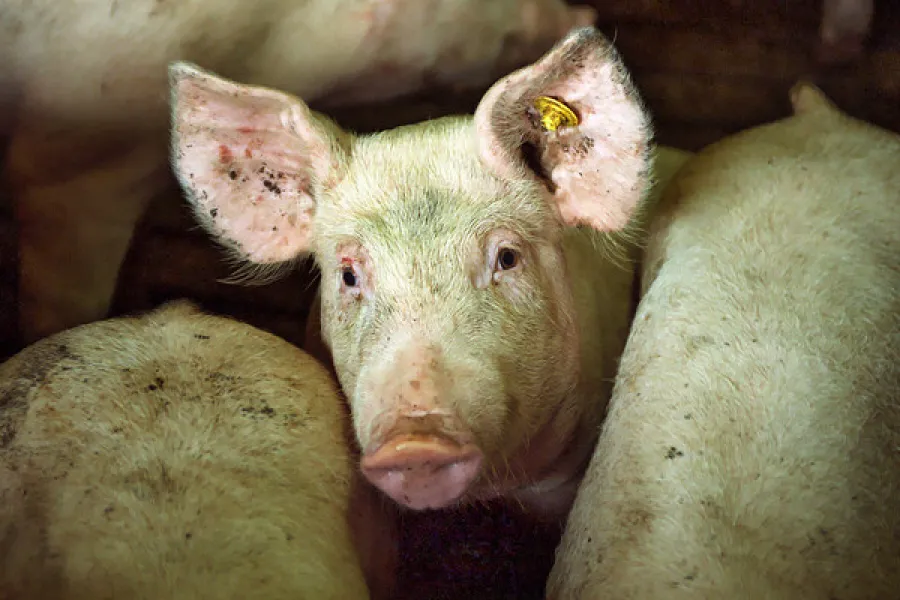
Scientists from the University of Georgia and the Georgia Institute of Technology in the United States have found that the pig brain is surprisingly similar to the human brain in terms of both structure and function.
TodayPress TV reports that the findings of a study published in the journal Nature Communications Biology show that pigs could serve as an ideal biological model for studying neurodegenerative diseases and testing new drugs.
Experts compared functional and diffusion magnetic resonance imaging data from 42 pigs and 100 humans. They found that both species have the same major neural networks, including visual, sensorimotor, frontal, auditory and default mode networks.
An analysis of white matter showed an 85 percent similarity in structural connectivity. The researchers also found that the geometry of the major neural pathways is almost identical in humans and pigs.
The study authors noted that the structure of the pig brain mirrors that of the human brain both in the spatial distribution of neural networks and in how activity changes over time. This suggests that pigs process information according to principles similar to those of humans.
Although the density of nerve fibers is higher in the human brain, the basic topography of neural pathways was found to be preserved across the two species.
Historically, rodents have been the primary animals used in neurobiological research. However, their smooth brains differ significantly from the human brain in terms of size and network structure. Primates are anatomically closer to humans, but experiments involving them are subject to strict ethical restrictions and high costs.
Pigs, meanwhile, have a convoluted cerebral cortex, a skull volume comparable to that of humans and similar metabolic processes.
These anatomical characteristics make pigs promising models for studying traumatic brain injuries as well as Alzheimer’s, Huntington’s and Parkinson’s diseases.
According to the scientists, the new findings could encourage researchers to focus more on larger animal models.
In the future, experts plan to investigate how the brains of pigs and other even-toed ungulates develop with age. This is expected to help improve understanding of childhood trauma and the mechanisms underlying neurodegenerative processes in humans.
Giymat Mahir