
At President Aliyev’s meeting: The Zangezur corridor map takes shape
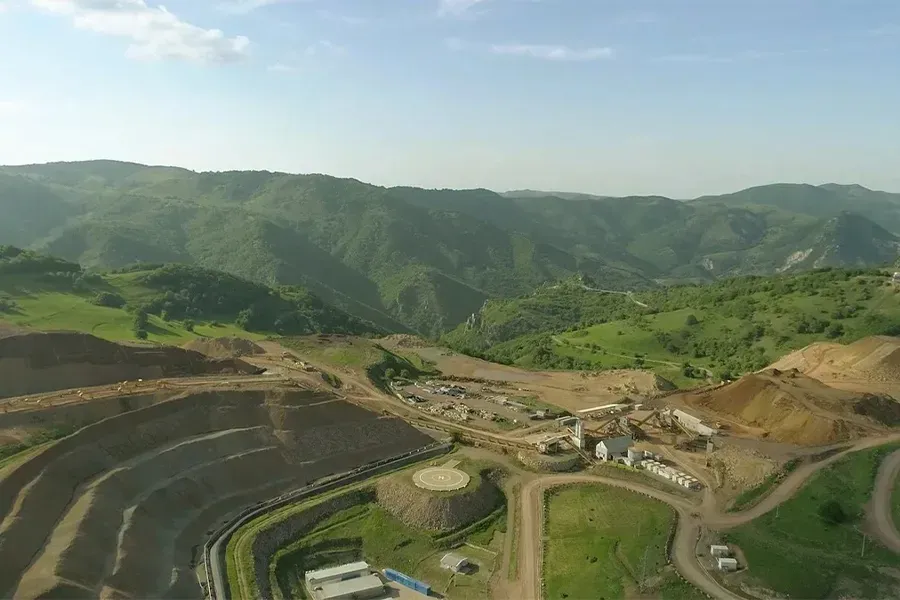
The “State Program for the Development of the Mining (Metal Ores) and Metallurgical Industries in the Republic of Azerbaijan for 2027–2030” was presented to the public at a meeting chaired by President Ilham Aliyev on September 22.
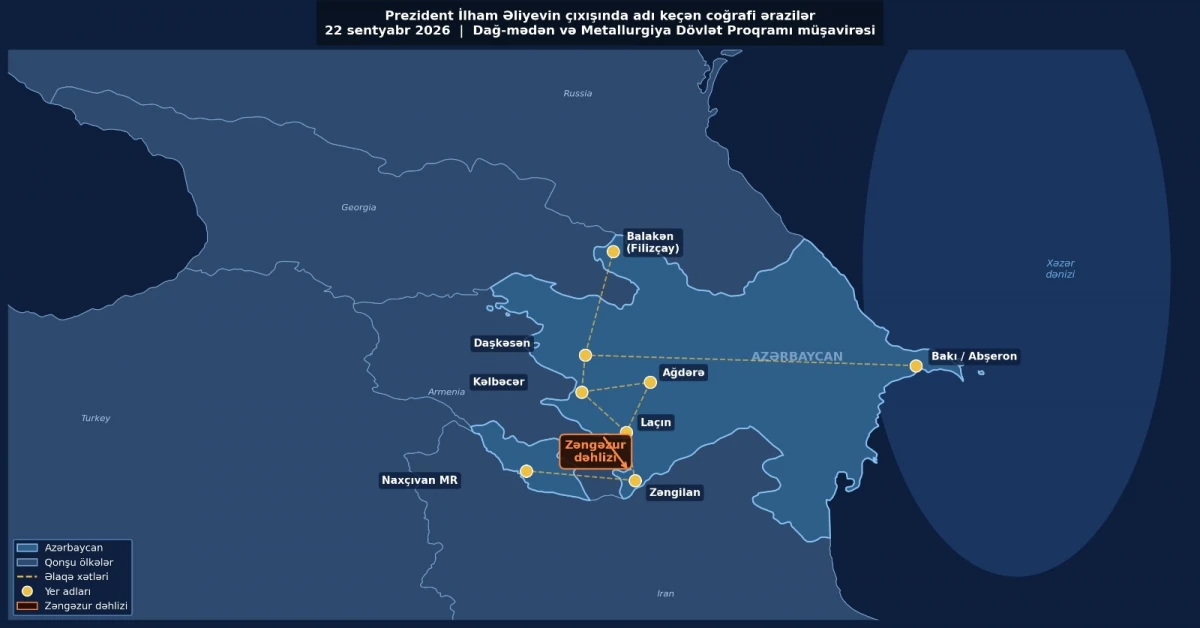
Let us look at the geography of the areas mentioned in the address: Kalbajar, Aghdara, Lachin and Zangilan — all are territories liberated after the 2020 Patriotic War.
Dashkasan and Balakan (the Filizchay deposit), meanwhile, define Azerbaijan’s industrial potential in the western direction. The Nakhchivan Autonomous Republic, as the southwestern point on the map, brings the issue of the Zangezur corridor to the agenda.
The 5.3 billion-manat investment program is focused on strengthening the economic presence of the state in the liberated territories.
Nakhchivan AR occupied a special place at the meeting.
A geological exploration agreement with a company from the United Arab Emirates, plans to commission the Ortakend gold deposit in 2029, and work on the Goydag and Bashkend deposits are all linked to accelerating Nakhchivan’s integration into Azerbaijan’s industrial map.
However, one condition must be fulfilled for this integration to acquire its full meaning.
That is the restoration of transport connectivity between Nakhchivan and the main part of Azerbaijan.
This is precisely why the issue of the Zangezur corridor cannot be considered separately from the context of this program.
Every industrial project along the Zangilan-Nakhchivan route involving copper, gold and polymetals also serves as an economic argument for opening the corridor. This is because the optimal route for transporting, processing and exporting resources runs through Zangezur.
The State Program indirectly substantiates the necessity of the Zangezur corridor in economic terms.
The Filizchay polymetallic deposit in Balakan district is described as one of Europe’s most promising deposits in terms of copper, zinc and lead reserves. The deposit, which has an estimated economic value of 29.7 billion manats, is planned to be fully operational by 2031.
This fact shows that Azerbaijan’s relations with Europe go beyond ties built solely around energy, particularly gas.
At a time when critical mineral supply has risen to the top of Europe’s political agenda, the Filizchay deposit could potentially become a new platform for cooperation. At the same time, it could serve as a real instrument for Azerbaijan to move beyond the framework of being “merely a transit country” in its relations with Europe.
Ismayil Shahli