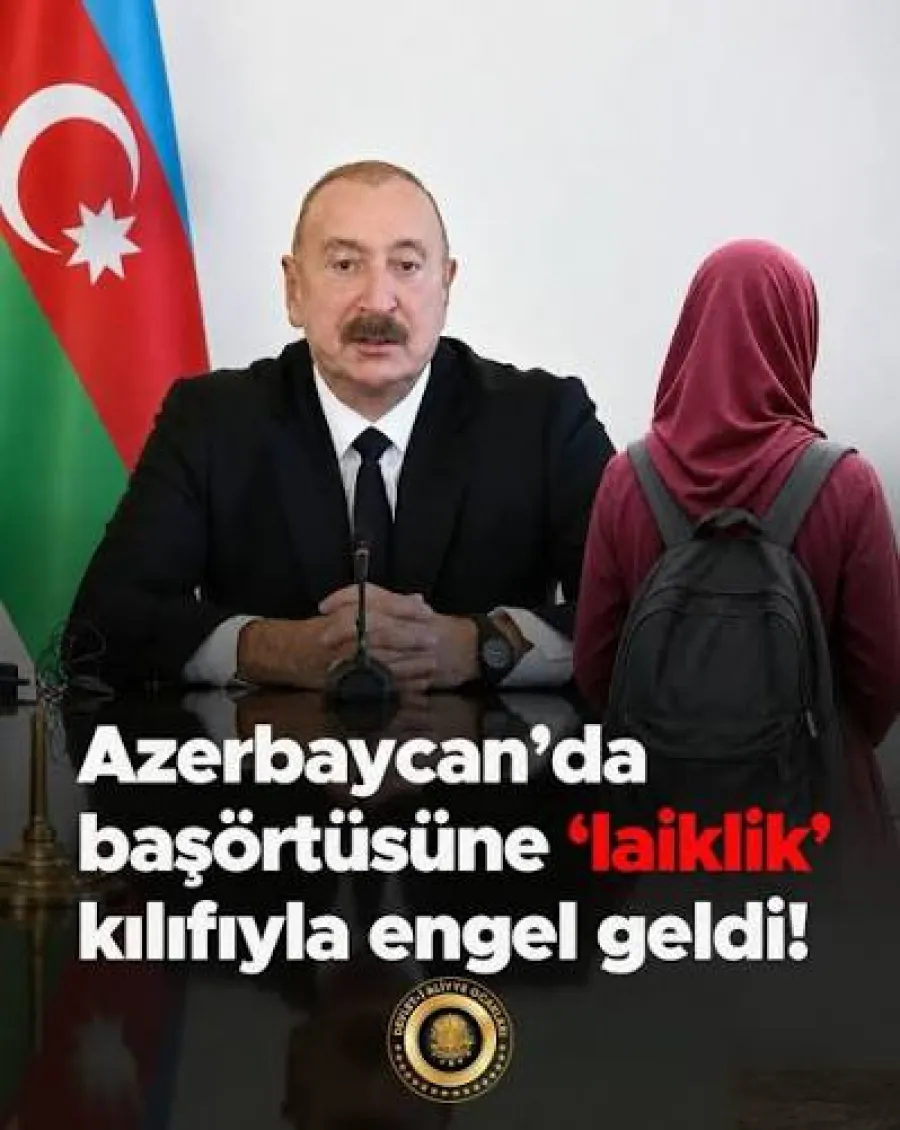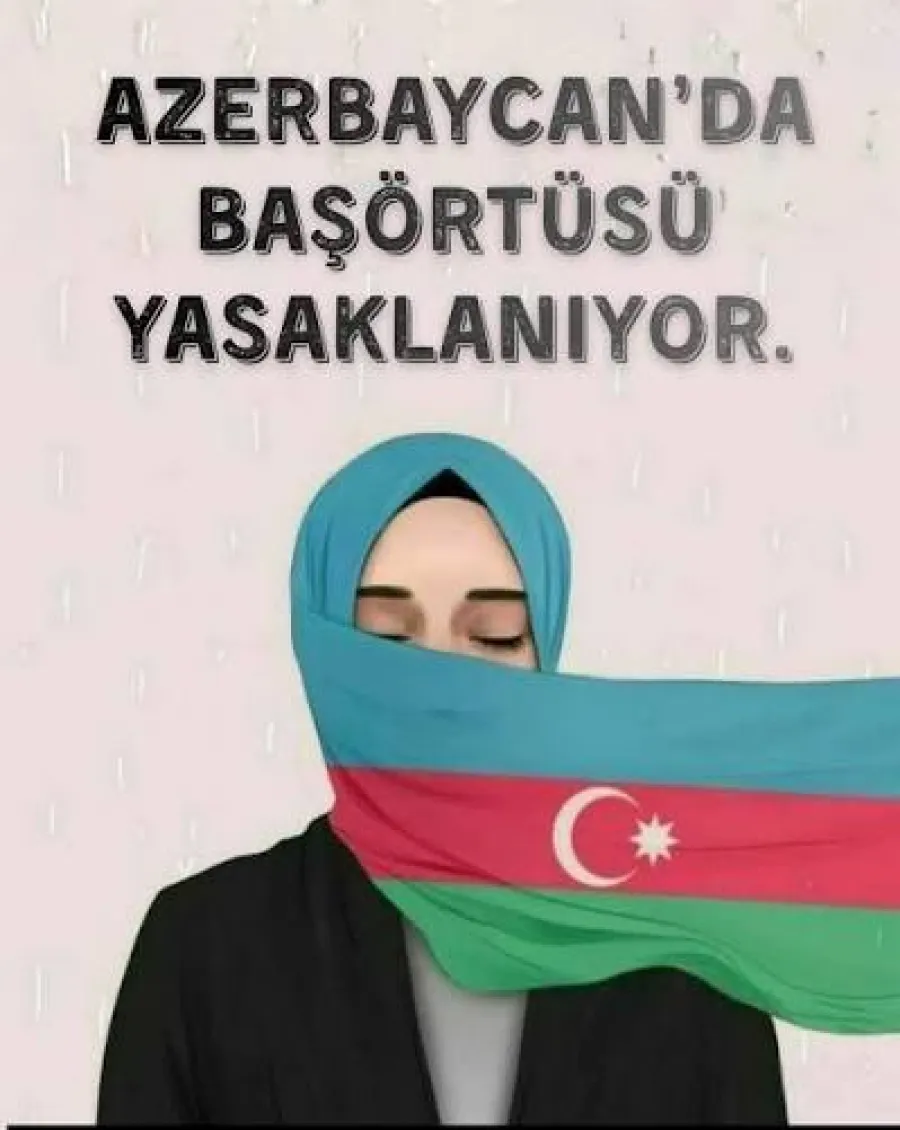

The agenda behind the hijab controversy in Türkiye: Azerbaijan!
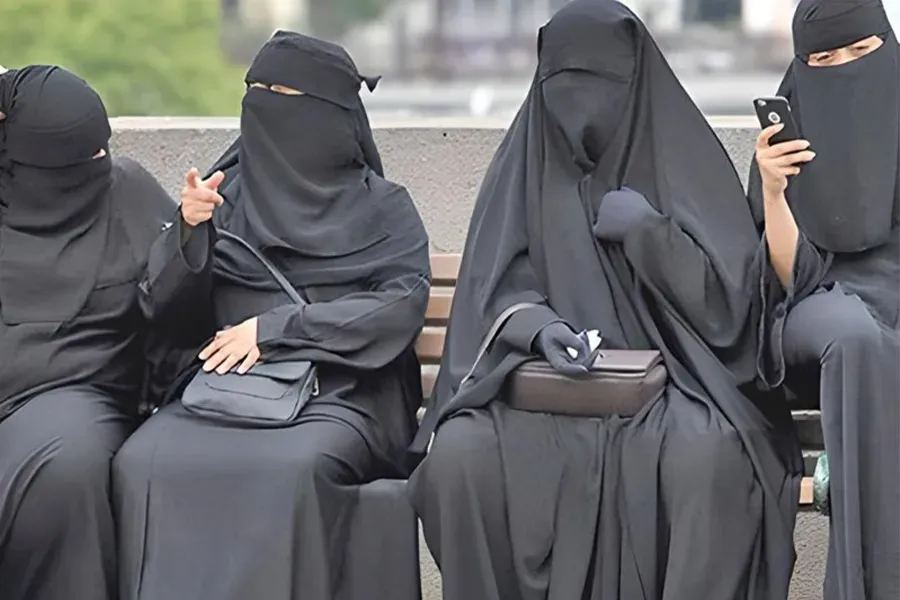
Once again, anti-Azerbaijani sentiment has flooded Turkish social media. Systematic attacks targeting the country’s leadership, along with the social media pages sharing them, are increasingly appearing across the Azerbaijani segment.
Just as Armenian posts flooded the entire Azerbaijani social media space a week ago on the third anniversary of the anti-terror operation, we are once again facing attacks involving both bots and real accounts allegedly operating from Türkiye.
What makes the situation particularly striking is that actions associated with Armenia may be understandable to some extent, but when the targeting of the country’s leadership under the guise of the headscarf follows immediately afterward, the fact that these are two different countries — one an enemy and the other a brotherly state — raises questions about whether there is a coordinated and sustained line of attack, or whether the attacks originating from the same wave are specifically directed against Azerbaijani statehood.
Azerbaijan’s Constitution guarantees freedom of worldview and the freedom to choose and live according to one’s beliefs and way of life. However, the reality facing this region is more complex than the objectives that may emerge from behind the niqab, chador or hijab. Undoubtedly, while respecting freedom of religion, I would not want to use expressions in this article that could seriously offend or provoke anyone. However, when we look at our specific circumstances and the situation in neighboring countries and the broader East, we can see how problematic and absurd it would be to avoid discussing what the state is doing right or wrong.
Nor is this simply a matter of lengthy debates over whether religious symbols are connected to clothing or whether clothing is connected to religion. But there is a serious piece of evidence.
Expanding the activities of growing religious movements and increasingly influential sects into education and even into primary-school children and secondary-school corridors creates fertile ground for serious future threats to the country’s secular character and constitutional order.
Yes, when religion becomes politicized and mass-based, and people begin living according to the Sharia rules it prescribes, it can lead to the country’s fundamental law being sacrificed to products of medieval Arab and Bedouin thinking.
Undoubtedly, those who exploit religious beliefs can manipulate large groups of people into opposition to the state in which they live, ultimately succeeding in producing radicals, fundamentalists, terrorists and others.
Today, the existence of cells allegedly organized and created by Iranian agents under the banner of religion, hijab and Shiism is cited as evidence of this. This group has embraced such extreme fanaticism that, according to the author, they openly betrayed the state to which they belonged during Iran’s acts of sabotage against Azerbaijan. The same, he argues, can be said about activities associated with Turkish, Saudi and other Western-origin sects.
For this reason, the country and its future must not be handed over to religion or to powerful transnational interests seeking to derive major gains from and exploit it. Azerbaijan cannot and should not become Afghanistan, Iran, Syria, Lebanon or similar states. Our success has been in building multiculturalism in a beautiful country. Azerbaijan — distinguished in the East for its culture, music, education and elite traditions — must be protected and defended.
As long as religion remains a private matter within the home, it is a normal part of life. But if it turns into proselytizing and moves from mosques into streets and schools, that is fanaticism, and fanaticism would mean the permanent destruction of our country.
As for the other issue, yes, under decisions signed by the Prime Minister, rules on the use of a unified school uniform in secondary schools have been approved and will be implemented.
Regardless of biological or physical stages, we should say that a child attending secondary school is a child.
A child must develop and make their own choices, while school is the institution that provides the greatest guidance on this path. Through this light, the child learns about the origins of the world, science, physics, the universe and its laws. If they are not satisfied and their questions do not receive the validation of their “ego,” they will ultimately be free to make their own choices. But the groups trying to scribble on, contaminate and manipulate these blank pages have become so fervent that their behavior is difficult to understand.
They criticize the present day, yet as a society they show disrespect for the moral and ideological struggle waged by Azerbaijan’s intellectuals a century ago and for the legacy they created.
Just recently, President Ilham Aliyev emphasized the importance of Islamic solidarity at a meeting with religious leaders and strongly criticized Islamophobia around the world.
Against the backdrop of such a position, it is difficult to understand why this state and its leader are being targeted in Türkiye immediately after similar accusations from Armenia.
At a time when the geopolitical environment is becoming increasingly tense, the armed forces of three countries — Azerbaijan, Uzbekistan and Türkiye — have launched military exercises, demonstrating their strength and showcasing the power of Turkic identity to the world.
Yet somehow, in our brotherly country, no one appears to be calling a halt to the attacks against Azerbaijani statehood. How should this be understood?
After all, if the state wished, it could easily put an end to such posts and stop anti-Azerbaijani propaganda. Instead, we are seeing an Azerbaijan that is becoming increasingly polarized and portrayed as an enemy.
What is happening, dear brothers?
Or does our brotherly country see us as its own “TRNC,” or are they trying to demonstrate their power to us through the activities of this radical group?
Or how can it be that, while there are very few positions in the Iranian media accusing Azerbaijan in connection with this issue, such developments are taking place there?
Whose initiative and action are these assertive claims and positions about interfering in Azerbaijan’s internal affairs and disregarding its choices?
We share ethnic ties with Turks; we are strategic allies, brothers, and one people. But our history also contains painful pages such as Chaldiran. That is why we say: let us hold on to what unites us, while the issues that divide us are already more than 600 years old.
We cannot afford to make another mistake. Over the past century, while the peoples of Azerbaijan and Türkiye have sacrificed their lives for one another on the fields of Baku and at Gallipoli, let us protect the values that unite us, keep faith a personal matter, and preserve religion as religion.
Aziz Alibeyli, International Relations Researcher
PHOTOS