
President sends ruling party to the front line – Ideological war begins
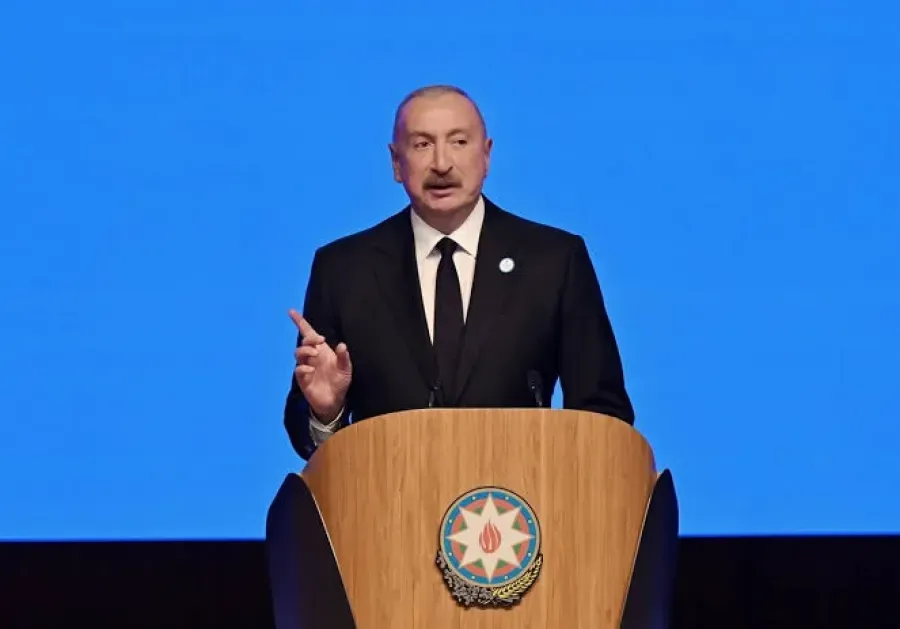
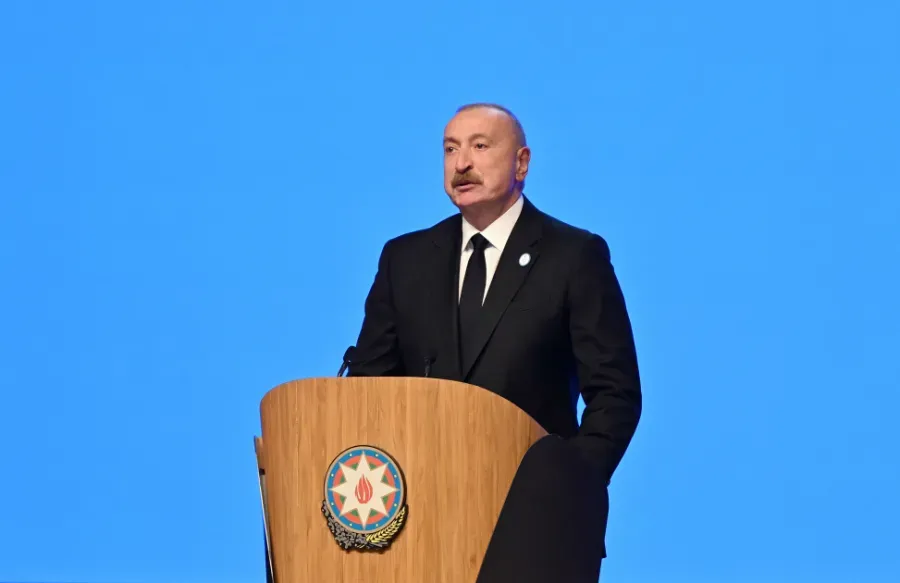
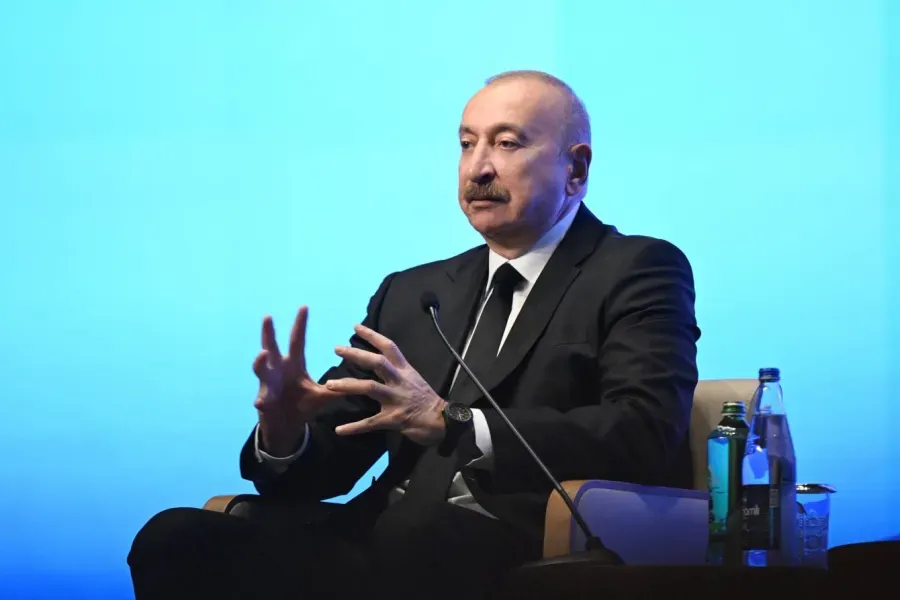
The 8th Congress of the New Azerbaijan Party (YAP) will bring significant changes to Azerbaijan’s political landscape. As it appears, President Ilham Aliyev’s speech at the YAP congress on October 2 will be remembered for serious statements that could influence the country’s trajectory and define a new political vision. Among these issues, the president made an unusually direct demand of his own party. He called on the party to organize its activities around proper ideological work, conduct new and modern ideological initiatives, and move away from clichés, events held merely for reporting purposes, and formal steps.
Undoubtedly, the head of state’s critical tone at the congress of the ruling party was not accidental. The points touched upon in his speech made it clear that there are serious and real threats, which can be analyzed in three directions:
* To what extent have ideological threats reached a destructive level?
* Why has this issue become so relevant precisely now?
* How can the ruling party’s tens of thousands of members and activists be mobilized against these threats?
The concept of an ideological threat is often treated as an abstract and difficult-to-understand notion. A tank, a missile, a border violation — and, frankly, war itself — are visible. Ideological influence, however, is invisible. It is a devastating weapon that eats away at a state from within and gradually, over time, weakens its foundations until it collapses. This very invisibility represents its greatest danger. A military attack unites society. For example, on the Karabakh front, people from all ideological segments of Azerbaijani society united around a common goal; they fought, became martyrs and veterans. An ideological attack, by contrast, divides society from within. It turns people against one another while also creating a deep gap between the state and society. As a result, a state can be weakened without any external intervention or a single serious shot being fired.
If we compare Azerbaijani society in 2020 with that of 2026, we can see that society is now more aggressive in its attitudes toward one another, and there are a number of serious issues over which uncompromising positions are beginning to emerge. This is also a consequence of destructive ideological activities of foreign origin. History is full of painful examples. The closest examples can be found in our own past. When the separatist movement in Karabakh began in 1988, it did not initially take the form of armed action. For years beforehand, history had been falsified, articles defending Armenia had been published in the Soviet press, and false perceptions about Azerbaijan had been created. All of this ultimately produced a situation in which Azerbaijan was not in a position to respond. Central television defended only Armenia’s position and ignored the truth about Azerbaijan. This ideological defeat occurred before the military defeat in the Karabakh war. As a result, Azerbaijan faced the loss of some of its most valuable territories and, ultimately, 30 years of occupation. That is why this lesson is extremely important for today’s generations: the loss of territory often begins first with the loss of an ideology and an idea.
The events in Crimea in 2014 are among the most studied examples of the modern era. Long before the annexation of the peninsula, Russian-language media had repeatedly instilled in the local population the idea that the authorities in Kyiv posed a serious threat to them. By the time the events began, the views of a significant part of society had already shifted positively toward Russia. The Donbas process followed, and an armed conflict erupted in a territory that had previously been subjected to Russia’s information influence, leading to wars that have continued for years. There is no doubt that the concept of hybrid warfare is now emphasized by everyone. Information operations have become one of the most frequently used methods both in preparation for military operations and during the conduct of hostilities.
The ideological threat has reached a highly destructive level. First, it undermines the concept of trust. Society begins to distrust its own state. As a result, even correct decisions are met with constant suspicion. The second aspect of this process is the serious issue of erasing historical memory. Attempts to devalue an achieved victory, overshadow the memory of martyrs, ignore the lessons of the past, and fail to mobilize the country’s future potential in this direction weaken the country’s ability to resist in the future. The third target is, of course, social cohesion. A considerable number of social media channels are attempting from abroad to turn groups in Azerbaijan against one another based on religious, ethnic and regional differences. This is aimed at seriously damaging Azerbaijan’s position as a multiethnic and multiconfessional country. Azerbaijan’s multicultural model is one of the strongest shields against this.
We now have a highly complex geography. The Russia-Ukraine war is taking place to the north of the country, while the United States-Israel-Iran war and a number of smaller clashes continue in the south and nearby regions. In this regard, Azerbaijan’s ideological security has become an issue that cannot be separated from foreign policy in terms of its importance to the country’s geography. The country is, of course, located at the intersection of three major cultural and political spheres. To the north, Russia regards the former Soviet space as its sphere of influence and prioritizes its freedom of action there. It seeks to manipulate part of society through the Russian-language information environment and wants to maintain its influence permanently. To the south, Iran is attempting to conduct extensive activities in Azerbaijan through religious identity and expand the influence of the Iranian religious ideology it promotes in the Azerbaijani language, seeking to put Azerbaijan in a position similar to that of the proxies it has created in countries such as Syria, Lebanon and Yemen.
It should not be forgotten that the president openly stated this reality: Azerbaijani-language provocations are being directed against us around the clock from our immediate neighborhood. Although no country was named, it is already clear to everyone that attacks have for years been directed at the Azerbaijani audience through Azerbaijani-language channels operated by the Iranian state, as well as by other neighboring states. These efforts seek to disguise other objectives through subtle propaganda. It should not be forgotten that the armed attack on Azerbaijan’s embassy in Tehran in January 2023 demonstrated the level of information provocation, and we subsequently witnessed the confrontational environment it created. Pressure from the West also continues. The main instruments here are undoubtedly parliamentary resolutions, campaigns conducted through international organizations, and attacks carried out through funds financed by forces opposed to Azerbaijan. The media agenda shaped by powerful diaspora lobbying should also not be overlooked. Revanchist circles remain on the other side of Armenia’s border. The president even stated in his speech that we remember the previous period of Armenia’s current leadership as well. In other words, these things must not be forgotten. An important meaning of the president’s remarks at the congress was that, unlike some countries, we do not need to create myths. The foundation of Azerbaijan’s ideology is real events — victory and triumph. There is no need to distort the country’s thinking through fabricated history and fairy tales.
Why, then, have these issues become so relevant at this particular time? There are several serious reasons, and they are, of course, closely interconnected.
The first reason is that our society is going through a transition from war to peace. During the war, society was united around a common goal. Almost all attacks against Azerbaijan from abroad proved ineffective and had no impact. In peacetime, however, the psychology of the post-conflict period comes into play, creating somewhat more favorable conditions for other influences to spread. As the image of a common enemy weakens, other problems inevitably become more prominent in society, and people focus more on domestic issues. As a result, foreign ideological centers try to approach countries more intensively in the post-war period, when they are vulnerable and weaker. In this sense, Azerbaijan is experiencing a transitional period, moving through a stage in which the energy generated by its victory is being expended. This is also a period in which pacifism can become stronger in society, emotional attitudes can stabilize, and we have entered a stage where we must decide how we will shape our future as a state and as a people. At this point, those who lost on the battlefield are attempting to occupy and divide the country on the ideological battlefield.
The second reason is Azerbaijan’s growing geopolitical weight. The president recently noted that the country had officially become a middle power and that Azerbaijan holds the key to what is known as the Middle Corridor, the East-West transport route. The issue of the Zangezur Corridor, Azerbaijan’s energy exports to Europe, and the COP29 event held in Baku in 2024 demonstrated and confirmed that the country is a key player in these processes. This is a new position, and there are major forces dissatisfied with Azerbaijan’s independent policy. They have launched increasingly intensive attacks in an effort to block this independent policy and weaken Azerbaijan through information warfare.
The third reason is the tensions that have emerged in relations with major powers in the region. It was not long ago that an aircraft belonging to Azerbaijan Airlines was fired upon over Russian territory and crashed, leading to a sharp deterioration in relations between Baku and Moscow. Following this, Azerbaijan took serious steps regarding Russia’s humanitarian and media activities, and these were among the most important approaches in Azerbaijan’s ideological self-defense. We know that there has also been prolonged tension in relations with Iran, where information channels have, in particular, become mouthpieces for groups speaking against Azerbaijan.
The fourth reason is the technological revolution. Artificial intelligence has reached a level at which fake videos and fake audio recordings are delivered to social media users through algorithms, generating anger and making such content increasingly aggressive. Posts by fake accounts sometimes reach several million views, while hundreds of fake accounts attempt to shape public opinion within a single day. Previously, information campaigns were conducted through television channels and newspapers and required considerable funding. Now, a few people and algorithmic systems are enough to launch attacks quickly and cost-effectively. This is precisely what the president was referring to: wherever a resource has been created in the Azerbaijani language, we must immediately understand its purpose.
The fifth reason is generational change. A large part of Azerbaijan’s population today did not witness the chaos of the 1990s and consists of young people who did not personally experience the pain of the occupation. They are largely uninformed about where information comes from and what its purpose is, and they are often unfamiliar with the history behind different approaches and narratives concerning trust in official media. Therefore, they do not know the purpose behind hostile attacks. This is why the president now says that the historical memory of this generation must be shaped. Who will shape that historical memory: the Azerbaijani state, Azerbaijani society, or issues prepared in foreign centers and forcibly imposed on our agenda? That is the question.
What is the role of the ruling party in combating such a threat? The president gave a clear answer: this work is as important as physical security. In other words, members of the New Azerbaijan Party must be at the forefront of this struggle. This is a new front, and a serious war is being waged there. The party’s advantage lies in its scale. Party structures and activists exist in virtually every city, district, institution, organization and structure across the country. There are young people, women and elders among its activists. The network includes an army of teachers, as well as doctors, engineers, students and entrepreneurs. They are embedded in society, and the vast majority of them are influential individuals. If properly organized, they can form the front line of this ideological battlefield like an army.
The problem lies precisely where the president pointed: the information war is now operating under completely different rules. We see that even an hour, or even a minute, can be decisive. False news spreads, and if you issue a rebuttal several days later, you are already too late. There is no place here for official state procedures or protocol-driven policy. A field has emerged in which individuals, political representatives and society must act in real time and in an emotionally engaged manner.
The party’s new ideological work should be organized in several directions.
First, the party must maintain a high level of digital readiness, while thousands of members of its Youth Union should conduct awareness campaigns on social media about disinformation. Large-scale training programs should be held on how to identify disinformation and expose fake content. The goal should not be to repeat the same text through hundreds of accounts. Such activity is inevitably perceived by audiences as trolling. There is no need for this; there are hundreds of thousands of patriotic individuals who are willing to defend Azerbaijan individually, and they can be identified. The process simply needs to be properly organized.
The second direction is the analytical base. False claims about Azerbaijan appearing in foreign media must be countered quickly and with evidence. This requires a center made up of specialists in history, geopolitics, international law and information security. Germany has political foundations operating alongside each parliamentary party, and this is a highly successful model. They conduct research, train young leaders and strengthen the party’s ideological position. The output of such a center cannot be limited to the Azerbaijani language; it should produce content in English, Russian, French, Arabic and Persian. The time has come to move into these languages.
The third direction is the local level. District organizations must be freed from formal events. Open meetings should be held with young people, trips to the liberated territories should be organized, memory projects should be carried out together with families of martyrs, and media literacy should be taught in schools as part of the relevant curriculum. Finland’s experience begins the fight against disinformation by preparing even young children for it. The country has incorporated media literacy into its education system and has ranked first in European media literacy for years.
The fourth direction concerns religious and ethnic sensitivities. Foreign propaganda often targets religious feelings and ethnic issues. Party activists should visit regions, work with religious communities and strengthen dialogue with different ethnic groups in order to prevent external influences and achieve meaningful results through discussion. Azerbaijan’s secular and multicultural model is the strongest tool for protecting this ideological policy.
Türkiye’s experience is also highly important. The party and state institutions have been coordinated. Ankara established the Presidential Communications Directorate in 2018 and created the Center for Combating Disinformation in 2022. The state should ensure central coordination and rapid rebuttals. The ruling party should immediately establish direct communication with society and disseminate messages at the local level. In Singapore, the ruling party has for decades promoted the idea of national unity as a core political value in a multiethnic society and built protection against external influence around civic identity.
Within this system, the coordination mechanism between the state and political parties is of particular importance. The Department for Relations with Political Parties and the Legislative Branch of the Presidential Administration serves precisely as this bridge. Its main task is to coordinate cooperation between the Presidential Administration, political parties and the Milli Majlis. The work carried out in this field in recent years has laid the foundation for a new stage. On December 16, 2022, the Milli Majlis adopted a new law on political parties. The law raised the registration threshold from 1,000 to 5,000 members. The figures showed that the party system had already begun to change. In 2022, there were 59 parties in the country. After the law came into force, 33 parties ceased operating and 26 parties were registered. Although the number was lower, these were parties based on actual membership, creating opportunities for systematic dialogue. The department regularly works with political parties in this new environment.
In May 2024, an extensive meeting with political parties was organized with the participation of the Milli Majlis administration, the Central Election Commission, the Chamber of Accounts and other institutions, with the aim of establishing constructive cooperation between political parties and state bodies. The growing role of political parties in society was assessed at the meeting as one of the key elements of the new political configuration taking shape in the country. At individual meetings with political parties, particular emphasis was placed on their role in ensuring national dialogue and solidarity around fundamental values. This approach fully coincides with the message delivered in the congress speech.
After the congress, new tasks await the department. Creating inter-party consensus on ideological security is at the top of this agenda. If the fight against foreign interference remains solely the work of the ruling party, part of society may perceive it as an instrument of domestic political processes. A common position among all parties represented in parliament would give the issue national legitimacy. Legislative initiatives related to information security, transparency of foreign financing and combating disinformation in the digital environment also fall within the department’s coordination responsibilities.
Yes, the speech at the 7th Congress has created a historic task for the New Azerbaijan Party. A party that has been in power for more than 30 years is now beginning to act as an institution of ideological security. In 1988, Azerbaijan was caught unprepared on the ideological front. In 2020, the country achieved a historic victory on the battlefield. Now comes the third stage. This victory must be reflected, preserved and protected in people’s minds, in the information space and in the memory of future generations. The party’s army of activists must move beyond formal events and shift to live communication. Moving from clichés to fact-based analytical work will establish Azerbaijan’s ideological borders on a strong defensive foundation, making this sphere as resilient as the country’s state borders.
Aziz Alibeyli, International Affairs Expert